

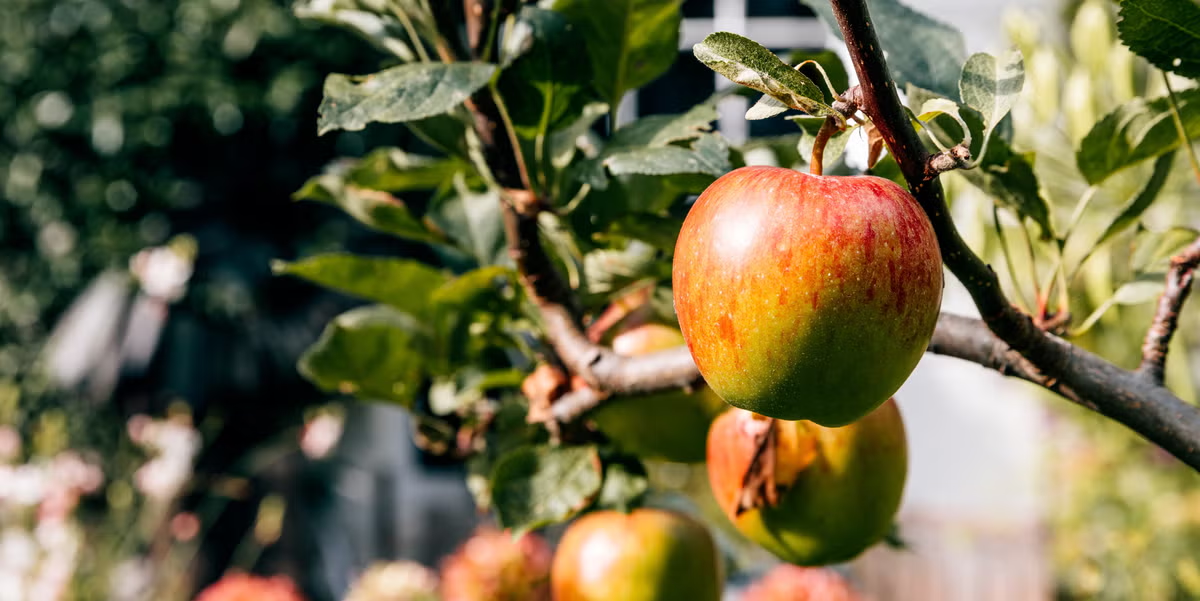
Early apples have one clear advantage in British gardens: they bring the first proper harvest of the fruit year, often weeks before the main-crop varieties are ready. That matters in a climate where a short summer, cool nights and unreliable weather can make timing just as important as flavour. An early apple can give a gardener fresh fruit from late July into August, while also spreading the workload before autumn pruning, storing and preserving begin.
That early harvest is only part of the appeal. Many early cultivars suit smaller plots, mixed gardens and family orchards because they tend to be used quickly rather than stored for months. They also provide a useful way to test what performs well in a specific garden before committing more space to later apples. The fruit trees specialists at Fruit-Trees nursery advise that gardeners who want a practical start to the apple season should focus on reliable, well-matched cultivars and local growing conditions rather than choosing by name alone. For anyone planning to buy early varieties apple trees, their guidance is to look carefully at pollination, rootstock choice and whether the fruit is best for eating straight from the tree or for kitchen use.
In British conditions, early apples rarely behave like long-keeping supermarket fruit. They are usually softer, more aromatic and best picked at the right moment, which makes them especially rewarding for home growers. The six varieties below stand out because they offer a useful mix of flavour, reliability and garden suitability. Some are best eaten within days, some are stronger in the kitchen, and some bridge the gap between true early apples and the first dependable autumn sorts. Together, they provide a realistic guide for gardeners who want apples sooner, not simply more of them later.
Why Early Apples Matter in British Gardens
British gardeners often think first about classic late apples such as Cox, Bramley or Egremont Russet, but early apples deserve a different kind of attention. They solve several practical problems at once. In smaller gardens, where there may only be room for one or two trees, an early crop extends the season without needing a large orchard. In family gardens, they provide fruit during the school summer break, when apples can be picked and eaten straight away instead of being left to storage plans that may never happen. In kitchen gardens, they fill a useful gap between soft fruit and the heavier autumn harvest.
The term “early season” can cover a range from very early dessert apples in late July to varieties that are fully usable by late August or early September in cooler areas. In the south of England, a warm spring may move the season forward. In Scotland, northern England or exposed western sites, the same tree may ripen a week or two later. This is why no apple calendar is exact. Local soil warmth, shelter, summer sun and pruning all affect the picking date.
There is also an important difference between ripening early and cropping reliably. Some very early apples are famous in old orchard lists but are too inconsistent, too prone to dropping, or simply too fleeting for modern gardens. A useful variety for a British home plot should have more than novelty value. It should perform steadily, tolerate ordinary weather, and offer flavour that makes the short season worthwhile.
Rootstock also matters more than many new growers realise. An early apple on a very vigorous rootstock can become harder to manage and slower to settle into regular cropping. On a more moderate rootstock, especially MM106 or M26 in the right setting, many early apples are easier to keep productive and within reach. In practical terms, that means better light, easier thinning and less fruit wasted to windfall.
For British gardens, the best early apples are not just the first to ripen. They are the first that are genuinely worth growing. The varieties below have remained relevant because they offer a balance of earliness, flavour and reliability that suits real gardens rather than idealised orchards.
Discovery and Katy: Two Dependable Choices for Fresh Eating
If one apple has become the modern benchmark for an early British dessert variety, it is Discovery. It ripens early enough to feel like the beginning of the apple season rather than merely an early autumn fruit, and it has the kind of clean, bright flavour that makes sense in a domestic garden. When picked at the right stage, Discovery is crisp, juicy and lightly sharp, with enough sweetness to appeal to most tastes. Its flesh can sometimes show a pinkish stain near the skin, which adds to its appeal when eaten straight from the tree.
Discovery is often recommended because it performs sensibly in a broad range of British conditions. It is not the most glamorous apple, but it is reliable, manageable and productive. For gardeners in suburban plots or mixed borders, it also tends to suit smaller forms such as bush, half-standard or cordon, depending on the rootstock. It is not a long keeper, and that is exactly the point: Discovery is at its best when treated as a seasonal apple to be enjoyed fresh, juiced or cooked lightly in the week or two after picking.
Katy, sometimes known historically as Katja, is another strong option for gardeners who want an early dessert apple with broad appeal. It usually follows close behind Discovery and has a brighter red flush, attractive shape and a sharper, livelier flavour. In a warm year it can be excellent for eating out of hand, while in a cooler year it often keeps a firmer, brisk character that works well in salads, juice and light desserts. Children tend to like it because it looks like the sort of apple they expect, but it usually has more real flavour than a standard shop apple.
Katy also has a reputation for cropping well, which makes it useful in gardens where space is limited and each tree needs to justify itself. The fruit can colour attractively even where summer is mixed rather than consistently hot. That said, it still benefits from open pruning and good light. Like most early apples, it should be picked in stages rather than all at once. Fruit from the sunny side of the tree may be ready well before shaded apples inside the canopy.
Between them, Discovery and Katy cover what many British households want from early apples: dependable cropping, good flavour, easy eating and no need for long storage. They are not rare curiosities. They are practical choices that continue to earn their place.
Worcester Pearmain and Beauty of Bath: Older Apples That Still Earn Their Space
Older British apple varieties often survive in catalogues because of nostalgia, but some remain worth growing for more solid reasons. Worcester Pearmain is one of those. It has long been valued as an early dessert apple with a distinct flavour and attractive appearance, usually showing a red flush over a yellow background. In good conditions it can be juicy, sweet and aromatic, with a hint of strawberry-like character often mentioned by experienced growers. That description can sound exaggerated until the fruit is picked fully ripe and eaten fresh.
Worcester Pearmain suits gardeners who like traditional British apples with more personality than a standard supermarket type. It is not always as crisp as modern commercial fruit, and that is part of its charm. The flesh is tender rather than hard, and it is best appreciated in the short window when the fruit has fully developed but not yet softened too far. In southern and central parts of Britain, that can make it one of the most satisfying apples of late summer.
It also has value beyond flavour. Worcester Pearmain is known as a useful pollinator for other apples because of its flowering characteristics, which can make it a strategic choice in small orchards. A garden with room for only two or three apple trees may benefit from that dual role. However, it should still be chosen for its fruit quality first, because a pollinator that nobody wants to eat is a poor use of space.
Beauty of Bath is earlier still and has long been regarded as one of the first notable dessert apples of the British season. At its best, it is juicy, gently scented and refreshing, but it is more delicate than Discovery or Katy and often has a very short picking and eating window. This has reduced its popularity in some modern gardens, where growers want fruit that holds better on the tree or lasts longer after harvest. Even so, in the right setting it can be an excellent choice for those who value the novelty and pleasure of very early apples.
Beauty of Bath is best understood as a specialist home-garden fruit rather than a general-purpose apple. It rewards close attention. Picked too early, it can be underwhelming. Picked just right, it tastes like the first true apple of the year. For gardeners who enjoy seasonal precision and older orchard character, it still justifies its place.
James Grieve and Grenadier: One for Versatility, One for the Kitchen
James Grieve occupies an especially useful position in British apple growing because it is neither a very early novelty nor a strictly late main-crop apple. Instead, it bridges the seasons. In many gardens it is ready from late August into September, depending on region and weather, and that makes it highly valuable for anyone wanting continuity after the first early apples have passed. It is one of the most versatile apples available to the home grower, useful both as a dessert fruit and in the kitchen.
When picked on the early side, James Grieve is brisk, juicy and refreshing, with enough acidity to keep it lively. Left a little longer, it becomes sweeter and softer. That flexibility is part of its appeal. A single tree can effectively provide fruit for different uses over a longer period, especially if picked in several passes. For British households that want a practical all-rounder rather than separate trees for every purpose, this is a serious advantage.
James Grieve also tends to crop well and has adapted successfully to a wide range of regions across Britain. It is often recommended for less experienced growers because it behaves predictably and offers clear value in return for ordinary care. It does not ask for perfect conditions, only reasonable light, sensible pruning and the usual management of pests and disease. In a mixed garden, that level of reliability matters more than fashionable rarity.
Grenadier serves a different role. It is not a dessert apple at all in the usual sense, but one of the earliest useful cookers for British gardens. That distinction is important because many gardeners focus entirely on eating apples and then realise too late that they also want fruit for sauce, crumble and pies before autumn Bramleys are ready. Grenadier answers that need. It crops early, cooks down well and offers a sharp, clean flavour suited to classic British kitchen use.
The tree itself can also be productive and practical, which makes it attractive for households that cook regularly. A few fruits may go a long way in the kitchen, particularly in sauces and bakes where texture matters as much as acidity. In a small garden, Grenadier is worth considering if space allows two trees rather than one, paired with an early dessert variety for balance.
Together, James Grieve and Grenadier show that the early apple season is not only about the first fruit to eat from the branch. It is also about covering household needs intelligently, with trees chosen for real use rather than catalogue romance.
Choosing the Right Tree for Your Garden, Soil and Space
Selecting the right early apple is not simply a matter of taste. A variety that performs well in one British garden can disappoint in another if the rootstock, pollination group or site conditions are wrong. This is why orchard specialists usually begin with the garden itself rather than the fruit description. Soil type, exposure, frost pockets and available sunlight all influence whether an apple tree becomes a success or a long-term compromise.
In much of Britain, the biggest hidden issue is insufficient light. Apples are resilient trees, but fruit quality depends heavily on sun and air movement. Early varieties in particular need enough light to build flavour and colour in a relatively short growing window. A tree planted against a north-facing fence or squeezed into permanent shade may survive perfectly well while producing fruit that never reaches its full character. Even in small gardens, an open sunny corner is usually better than a more decorative but poorly lit position.
Pollination deserves equal attention. Many apples need a compatible partner nearby, whether in the same garden or in neighbouring gardens where other apple or crab apple trees are already present. In built-up areas this is often less of a problem than people think, but it should never be assumed. A tree that flowers well and sets little fruit may simply lack an effective pollination match. Checking flowering groups before purchase is basic but essential.
Rootstock is where many buying decisions improve or fail. For average garden use, a moderate rootstock often offers the best balance between size, productivity and manageability. A tree on M27 may suit very small gardens or containers but requires more careful management. M26 can work well for compact bush forms with support. MM106 often suits larger gardens and traditional bush or half-standard trees. Choosing too vigorous a rootstock for a tight urban garden often leads to shade, pruning problems and fruit that is difficult to reach.
Gardeners who plan to buy early varieties apple trees should think beyond the first crop and ask what shape of tree best fits their lives. A cordon along a fence, a fan against a warm wall, or a small bush in the lawn can all work well, but only if the training system matches the available time and the site. The best early apple is not just the tastiest one in a catalogue. It is the one that can be grown properly where it is planted.
Getting the Best from Early Apples Once They Start Cropping
Early apples are often more demanding at harvest than later varieties because the gap between underripe and overripe can be narrow. This is one reason they are so rewarding in home gardens and so poorly represented in long-distance retail supply. A gardener can watch the tree daily, test a few fruits and pick in stages. That kind of timing is impossible on a commercial scale but easy at home, and it is what brings out the best in these cultivars.
The usual sign of readiness is not just colour. Apples should part from the spur with a gentle lift and twist rather than needing a firm tug. Seeds darkening, background colour softening and full flavour developing are all better indicators than red skin alone. Some varieties, especially Discovery and Beauty of Bath, can look ready before they have gained their best taste. Others may start dropping quickly once they pass the ideal point. Regular checking in the ripening period matters.
Storage is limited with most early apples, and gardeners should plan around that rather than resist it. Keep fruit cool, dry and undamaged, but accept that many early varieties are designed for immediate use. Some are excellent in juice, where their brisk acidity and aroma come through well. Others are ideal for a week of eating fresh, slicing into lunchboxes or making simple tarts and sauces. The goal is not to make them behave like late keepers.
Pruning and thinning also have a direct effect on quality. A crowded tree produces more shade, poorer colour and smaller fruit. Light summer pruning on trained forms, careful winter pruning on established bushes, and sensible thinning in heavy crop years can all improve the final harvest. This is especially true in British seasons where sunlight may already be in short supply. Better-spaced fruit often tastes noticeably better.
Perhaps the main lesson from early apples is that they reward attention more than scale. A single well-managed tree can give a household weeks of useful fruit and mark the real beginning of the orchard year. For British gardeners, that is often more satisfying than waiting for autumn alone. Choose carefully, match the variety to the garden, and treat the harvest as a short season to enjoy at its peak. Early apples are not the longest-lasting fruits in the orchard, but they are often the ones people remember most clearly.
